
There is something wonderfully strange about living with a cat. One moment you bring home a tiny kitten who can fit into the crook of your arm, and before you know it, that same little creature is sleeping in the warmest chair like they personally own the house.
Cats don’t seem to follow our human sense of time at all, and thats why wondering about their real age can become surprisingly fascinating.
A Cat Age Calculator helps turn ordinary cat age into a more understandable human-equivalent age.
It gives you a way to think about cat years, human years, and the different stages of feline aging without relying on the old idea that every cat year simply equals seven human years. That old shortcut is easy to remember, but cats mature much faster during their first couple of years.
If you have ever looked at your cat and thought, “How old would my little troublemaker be if they were human?” you are certainly not alone.
A calculator can give you a useful life-stage estimate, whether your companion is a playful kitten, a settled adult cat, or a dignified senior who has mastered the art of staring at you until dinner appears.
| Cat Age | Human-Equivalent Age |
|---|---|
| 1 year | 15 years |
| 2 years | 24 years |
| 3 years | 28 years |
| 4 years | 32 years |
| 5 years | 36 years |
| 10 years | 56 years |
| 15 years | 76 years |
| 20 years | 96 years |
What Is a Cat Age Calculator?
A Cat Age Calculator converts a cat’s calendar age into an approximate human age. The important word here is “approximate,” because feline aging isn’t a perfect mathematical mirror of human aging.
Cats develop differently from people, and their biological age can vary depending on genetics, lifestyle, health, environment, and other individual factors.
A modern cat age conversion approach recognizes that cats mature very quickly during the first two years. A 1 year old cat isn’t equivalent to a seven-year-old child, for example.
By around one year, a cat has already gone through major physical and developmental changes.
The model used by this calculator follows the LeBeau method, a commonly referenced feline age conversion method that treats the first years differently from later years.
In simple terms, the aging rate changes as a cat moves from kittenhood into adulthood and then toward the senior stages. It’s a much more sensible approach than simply multiplying the number by seven.
For everyday understanding, the method works like a piecewise age model. That sounds rather technical, but the idea is simple: different portions of a cat’s life use different conversion rates. Your cat doesn’t age at exactly the same speed throughout its entire life, which is kind of the whole point.
How the Cat Age Calculator Works
The Cat Age Calculator uses several stages rather than one universal multiplication rule. The first year represents a huge amount of feline development, the second year adds another substantial amount, and later years progress more gradually.
The basic cat age formula can be understood like this:
- 1 cat year = approximately 15 human years
- 2 cat years = approximately 24 human years
- Years 3–14 = about 4 human years per additional cat year
- Years 15+ = about 2 human years per additional cat year
So, a 1-year-old cat is approximately 15 in human years, while a 2-year-old cat is approximately 24. From there, each additional year through age 14 adds around four human years.
After age 14, the model slows the conversion further. A cat entering the later senior period adds roughly two human years for each additional calendar year.
This doesn’t mean the cat’s actual biological processes suddenly slow down in a perfectly predictable way, of course. It’s simply a useful conversion model.
The Cat Age Formula in Simple Terms
For cats between ages 3 and 14, you can think of the calculation as:
24 + 4 × (cat age 2)
For cats aged 15 or older:
72 + 2 × (cat age 14)
These formulas make the calculator easier to understand instead of treating it like a mysterious little box that produces a number and refuses to explain itself.
Cat Age Chart: Cat Years to Human Years

A cat age chart gives you a quick way to see how the conversion changes across a feline’s life.
| Cat Age | Approximate Human Age |
|---|---|
| 0.5 cat years | 7.5 human years |
| 1 year | 15 human years |
| 2 years | 24 human years |
| 3 years | 28 human years |
| 5 years | 36 human years |
| 10 years | 56 human years |
| 11 years | 60 human years |
| 14 years | 72 human years |
| 15 years | 74 human years |
| 16 years | 76 human years |
The chart is useful because it shows just how dramatically the aging rate changes.
A five year old cat is only three calendar years older than a two year old cat, yet the human-equivalent age moves from about 24 to 36. Later, the difference becomes smaller because the model uses a slower conversion for Years 15+.
Remember, these numbers describe a conversion model rather than a medical diagnosis. Your cat doesn’t suddenly become “36” on their fifth birthday in the same way a person turns 36.
Cat Age Calculator Examples
Sometimes the easiest way to understand cat years to human years is to look at familiar ages.
A 6 month old kitten is approximately 7.5 human years under this model. That may sound surprising, but kittens develop remarkably quickly during their first year. At six months, many cats are already much more coordinated and independent than they were as tiny newborns.
A 1 year old cat corresponds to approximately 15 human years. By this stage, a cat has moved well beyond the fragile newborn period and is approaching adult physical development.
A 2 year old cat corresponds to about 24 human years. This is why the first 2 years are so important in a feline age conversion model. Those two calendar years represent a large amount of maturation.
A 5 year old cat comes out to approximately 36 human years. This is a good example of why the 7 year rule doesn’t really describe feline development very well.
A 10 year old cat is approximately 56 human years using this model. At this point, age-related veterinary attention becomes increasingly useful, even though individual cats can remain active and playful for many years.
A 14-year-old cat is approximately 72 human years. Once the cat reaches this point, the model begins using the slower senior conversion.
A 15-year-old cat is approximately 74 human years, while a 16 year old cat reaches approximately 76 human years. These later numbers illustrate that the model adds about 2 human years per year after age 14.
Why the Multiply by 7 Rule Isn’t Ideal for Cats
The Multiply-by 7 rule is probably one of the most famous shortcuts in pet-age conversations. It suggests that one animal year equals seven human years, which sounds wonderfully neat and tidy.
The problem is that feline development isn’t neat and tidy.
Using the 7 year rule, a one year old cat would be considered seven human years old. But a one year old cat has already reached a much more advanced developmental stage than that comparison suggests. The first year of a cat’s life contains rapid growth, learning, physical development, and maturation.
A better cat-age model therefore uses changing conversion rates. The first year is worth about 15 human years, the second brings the total to around 24, and later years progress at different rates.
So, if you want to calculate cat age in a meaningful way, a staged model gives you more useful context than simply multiplying by seven. The old rule is easy, yes, but easy doesn’t always mean accurate.
Cat Life Stages Explained

Numbers are helpful, but cat life stages can sometimes tell you more than a human equivalent number. Your cat’s age can help you understand where they are developmentally, but their behavior and health matter too.
Kitten Stage
The kitten period is the fastest changing part of feline life. During the kitten stage, young cats develop coordination, social behaviors, hunting skills, and physical independence.
A kitten may look tiny while behaving like a miniature tornado with whiskers. Their nutritional needs are also different from those of an adult, which is why kitten food is formulated for growth and development.
Adult Cat
An adult cat has moved beyond the rapid developmental phase. Their physical growth has largely settled, although individual cats can continue changing in body condition and behavior.
This period may include a long stretch of stable adulthood. A healthy adult cat can still be playful, curious, dramatic, sleepy, or all four before breakfast.
Mature Adulthood
Mature adulthood is a stage where subtle changes can become more noticeable. Your cat may sleep more, play differently, or gradually become less energetic.
This doesn’t automatically mean something is wrong. Still, changes in behavior, appetite, weight, drinking, grooming, or mobility deserve attention because cats are extremely good at hiding illness.
Senior Cat
A senior cat may require more attention to preventive healthcare. Veterinary visits, dental evaluations, appropriate nutrition, and monitoring for age related changes can become increasingly important.
Being a senior doesn’t mean a cat has stopped enjoying life. Many older cats remain affectionate, curious, and wonderfully opinionated for years.
Geriatric Cat
A geriatric cat is generally considered to be in a later senior life stage. The exact terminology can vary between veterinary sources and practices, so age alone shouldn’t be treated as a medical diagnosis.
At this stage, regular health screenings, veterinary care, and attention to changes in mobility or appetite can be especially valuable.
Cat Age Calculator and Veterinary Care
A calculator tells you an estimated human age equivalent, but it cannot tell you whether your cat is healthy. That’s an important distinction.
Veterinarians can evaluate your cat’s actual health trajectory through physical examinations and, when appropriate, bloodwork, dental evaluations, and other age appropriate screening. These assessments are much more meaningful for medical decisions than a human-equivalent number alone.
As cats grow older, veterinarians may pay attention to issues such as kidney disease, arthritis, dental disease, metabolic changes, and other age related health issues.
Not every older cat develops these problems, and not every health concern is caused by age, so professional evaluation matters.
Regular preventive screening can also help identify changes before they become obvious at home. Cats are famously talented at acting perfectly normal while quietly hiding discomfort, which is impressive but not especially helpful for their humans.
Cat Nutrition by Age
Age also affects cat nutrition. A growing kitten has different nutritional requirements from a mature adult, while a senior cat may have different needs depending on its health and activity level.
Kitten food is designed around growth and development. Once a cat reaches adulthood, an appropriate adult cat food can support maintenance rather than rapid growth.
For older cats, senior cat food may be considered depending on the individual animal, but there isn’t one perfect diet for every senior. Nutritional choices should take into account body condition, health status, activity level, and veterinary recommendations.
The useful lesson is simple: don’t choose food based only on the human equivalent number from a cat age calculator. The number is a guide to life stage, not a prescription.
Do All Cat Breeds Age the Same Way?
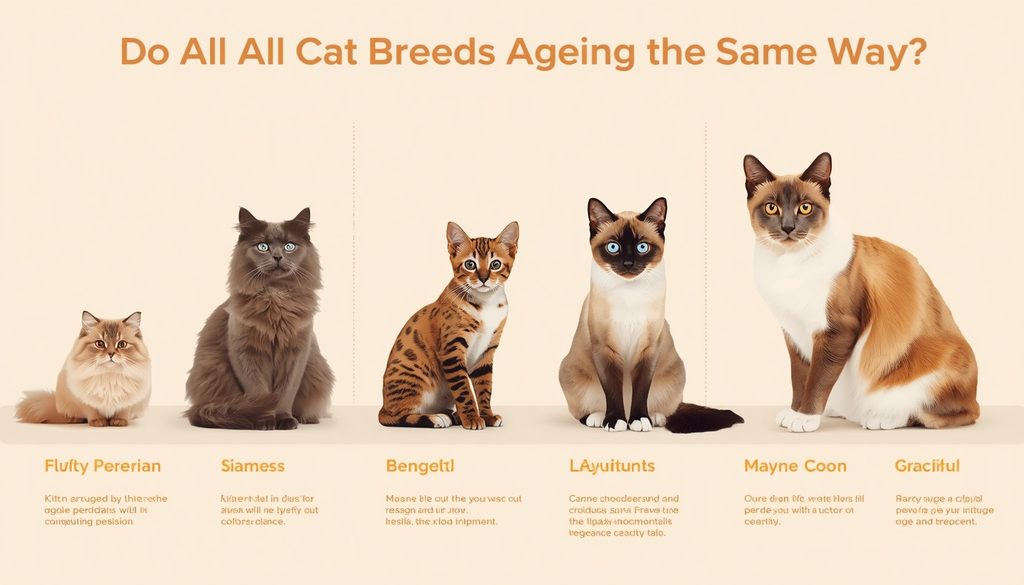
No two cats are exactly alike, and cat breeds can have differences in genetics, body size, health patterns, and longevity. Siamese, Burmese, Maine Coon, Persian, and domestic cats can all have different individual experiences with aging.
However, breed shouldn’t be treated as a crystal ball. Breed differences may influence lifespan and health risks, but individual variation is substantial.
Genetics, preventive care, nutrition, environment, disease exposure, and overall health can all contribute to a cat’s lifespan. Two cats of the same breed and age can therefore have very different health trajectories.
This is why a cat age by breed calculation should be treated cautiously. The calendar age remains useful, but it can’t capture every biological difference between individual animals.
Indoor Cats vs. Outdoor Cats
Living environment can influence feline health and longevity. Indoor cats generally avoid many environmental dangers that outdoor cats may encounter, including traffic, predators, parasites, and certain forms of disease exposure.
That doesn’t mean an indoor lifestyle guarantees a long life, nor does it mean every outdoor cat will experience poor health. Genetics, veterinary care, nutrition, enrichment, and individual circumstances all matter.
When people search for how long do indoor cats live, they are often really asking a broader question: “What can I do to help my cat stay healthy?”
The answer involves more than a number. Regular veterinary care, appropriate food, dental care, vaccinations, safe enrichment, and attention to behavioral changes all have a role.
An outdoor cat lifespan can also vary enormously because outdoor environments differ. A supervised outdoor experience is not the same as unrestricted roaming around busy roads and unfamiliar territory.
Cat Age Calculator and Pet Insurance
Age can also matter when considering pet insurance. Insurance providers may use age, location, breed, medical history, and other factors when determining eligibility, premiums, exclusions, or insurance risk tiers.
Older animals can have greater exposure to age-related risks, but a calculator’s human-equivalent age isn’t itself an insurance classification. Policies differ, so the actual terms from an insurer are what matter.
For owners of older cats, understanding potential senior pet care costs can be useful. Veterinary visits, dental care, diagnostic testing, and treatment for conditions such as arthritis or kidney disease can become part of long-term planning.
The calculator can help you understand your cat’s general stage of life, but it shouldn’t be used to predict insurance costs or future medical bills.
What Is the Human Equivalent Age of a Cat?
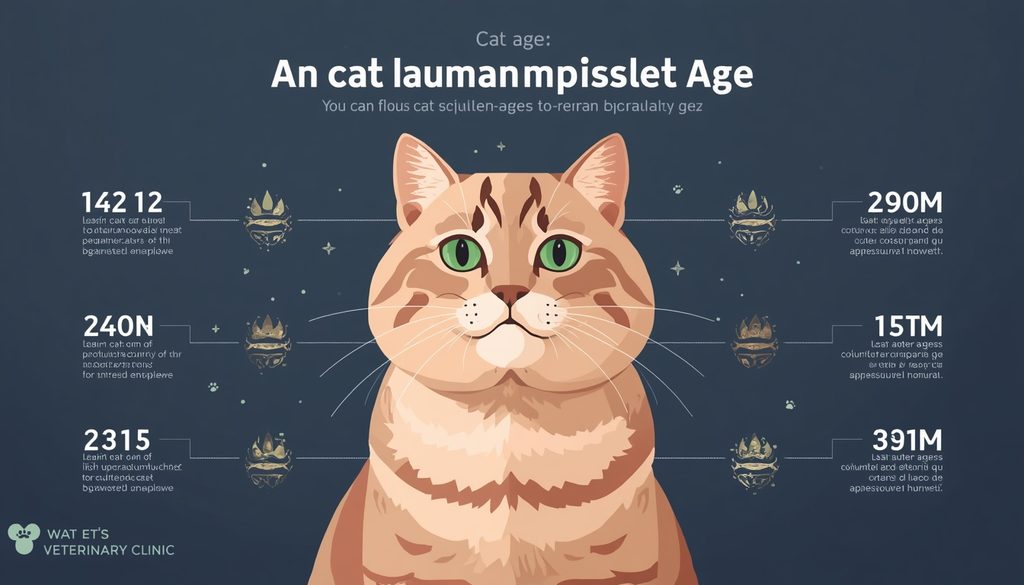
The human equivalent age is an approximate comparison between feline development and human aging. It isn’t saying that your cat thinks like a human of that age or experiences every biological process exactly like a person.
For example, a 5 year old cat corresponds to about 36 human years in this model. That comparison is useful because it communicates that the cat is well beyond kittenhood and established in adulthood.
Likewise, a 16 year old cat corresponds to around 76 human years. This gives owners an intuitive sense that the cat has reached an advanced life stage, where preventive care and monitoring may be particularly important.
The number is therefore best understood as a communication tool. It translates an unfamiliar feline timeline into something familiar to humans.
Common Questions About Cat Age
How old is a 1 year old cat in human years?
A 1 year old cat is approximately 15 human years using the LeBeau method. This reflects the rapid development that occurs during the first year.
How old is a 2 year old cat in human years?
A 2 year old cat is approximately 24 human years. The second calendar year adds about nine human-equivalent years to the first year estimate.
How old is a 5 year old cat in human years?
A 5 year old cat is approximately 36 human years under this model. After age two, the calculator adds roughly four human years for each additional cat year through age 14.
How old is a 10-year-old cat in human years?
A 10 year old cat is approximately 56 human years. This places the cat in mature adulthood, although the actual health status of an individual cat can vary greatly.
How old is a 15-year old cat in human years?
A 15 year old cat is approximately 74 human years. The calculation changes after age 14, with each additional year representing about two human years.
How old is a 16-year old cat in human years?
A 16-year-old cat is approximately 76 human years. At this age, regular veterinary monitoring can be particularly valuable because senior cats may develop subtle health changes.
How old is a 6 month old kitten in human years?
A 6 month old kitten is approximately 7.5 human years according to this conversion model. Young kittens develop quickly, so their first months represent a surprisingly large amount of maturation.
How to Use a Cat Age Calculator Correctly
Using a feline age calculator is usually very simple. Start with your cat’s actual calendar age, preferably using the most accurate birth date you have.
If the exact birthday is unknown, estimate the age as carefully as possible using adoption records, shelter information, veterinary assessments, or developmental clues. A veterinarian may be able to provide a reasonable age estimate when a cat’s history is uncertain.
Then enter the age into the calculator and review the estimated cat age in human years. Treat the result as a broad reference rather than an exact biological measurement.
For very young cats, months can matter because development happens rapidly. A 0.5 cat years estimate, for example, corresponds to approximately 7.5 human years in this model.
Why Cat Age Is More Than Just a Number

A calculator can tell you that your cat is approximately 36, 56, 72, or 76 in human-equivalent terms, but those numbers don’t tell the whole story.
Your cat’s biological age may not perfectly match its calendar age. A healthy indoor cat and a cat with chronic health problems can be the same chronological age while having very different needs.
That is why feline aging should be viewed through several lenses: calendar age, developmental stage, health history, genetics, lifestyle, nutrition, and veterinary care.
Think of the calculator as a map rather than the entire landscape. It points you toward a life stage, but your cat’s actual condition fills in the details.
Practical Ways to Support Your Cat at Every Age
A few simple habits can make a meaningful difference throughout your cat’s life:
- Keep regular veterinary care appointments.
- Follow recommended vaccinations and preventive treatments.
- Pay attention to appetite, thirst, weight, grooming, and litter-box habits.
- Make dental care part of your cat’s routine.
- Provide age appropriate cat nutrition rather than feeding the same way throughout life without considering changing needs.
- Give kittens plenty of safe opportunities for play and learning.
- Provide adult cats with exercise and mental enrichment.
- Make the home comfortable and accessible for older cats with reduced mobility.
- Discuss age-appropriate health screening with your veterinarian as your cat gets older.
- Never assume a sudden behavioral change is “just old age” without considering a medical cause.
These small things can be easy to overlook because cats are very good at becoming part of the background of our lives. Then one day you notice the little kitten isn’t so little anymore, and suddenly the years feel like they ran away while you were making coffee.
Frequently Asked Questions
cat years to human years
Cat years do not equal human years directly. A cat’s first two years represent a faster stage of development, followed by slower aging.
cat age calculator
A cat age calculator converts your cat’s age into an approximate human-equivalent age based on common feline aging patterns.
cat to human years
To convert cat age to human years, consider that the first two cat years cover much of the early development, while each later year adds fewer human-equivalent years.
cat years
Cat years measure a cat’s age, but cats mature much faster than humans during their first few years of life.
5 cat years to human years
A 5 year old cat is roughly equivalent to a human in their mid-30s, although the exact comparison can vary by the cat’s health and lifestyle.
Read This Blog:https://wevorix.com/random-state-generator/
Final Thoughts on Cat Age Conversion
A Cat Age Calculator offers a simple way to understand the fascinating difference between cat years and human years. Instead of using the traditional seven year shortcut, the LeBeau method recognizes that feline aging happens at different rates across different periods of life.
The basic conversion is easy to remember: 1 cat year is approximately 15 human years, 2 cat years are approximately 24 human years, and Years 3 14 add about 4 human years per year. After age 14, Years 15+ add about 2 human years per year.
But perhaps the most useful thing about learning your cat’s equivalent age isn’t the number itself. It’s the reminder that every stage deserves a slightly different kind of care.
A kitten needs room to grow, an adult cat needs healthy routines, and a senior cat may benefit from closer monitoring and extra comfort.
So whether you’re sharing your home with a mischievous six-month-old kitten, a relaxed five-year-old companion, or a wise 16-year-old cat who has seen every household routine come and go, their calendar age is only one piece of their story.
Use the cat age chart, explore the cat life stages, keep up with veterinary care, and most importantly, pay attention to the individual animal sitting beside you.
Because no calculator can quite measure the value of the quiet purr that appears beside you at the end of a long day. And honestly, thats probably the most important age conversion of all.
